Renting vs. Buying Laptops and Desktops: A Comprehensive Comparison
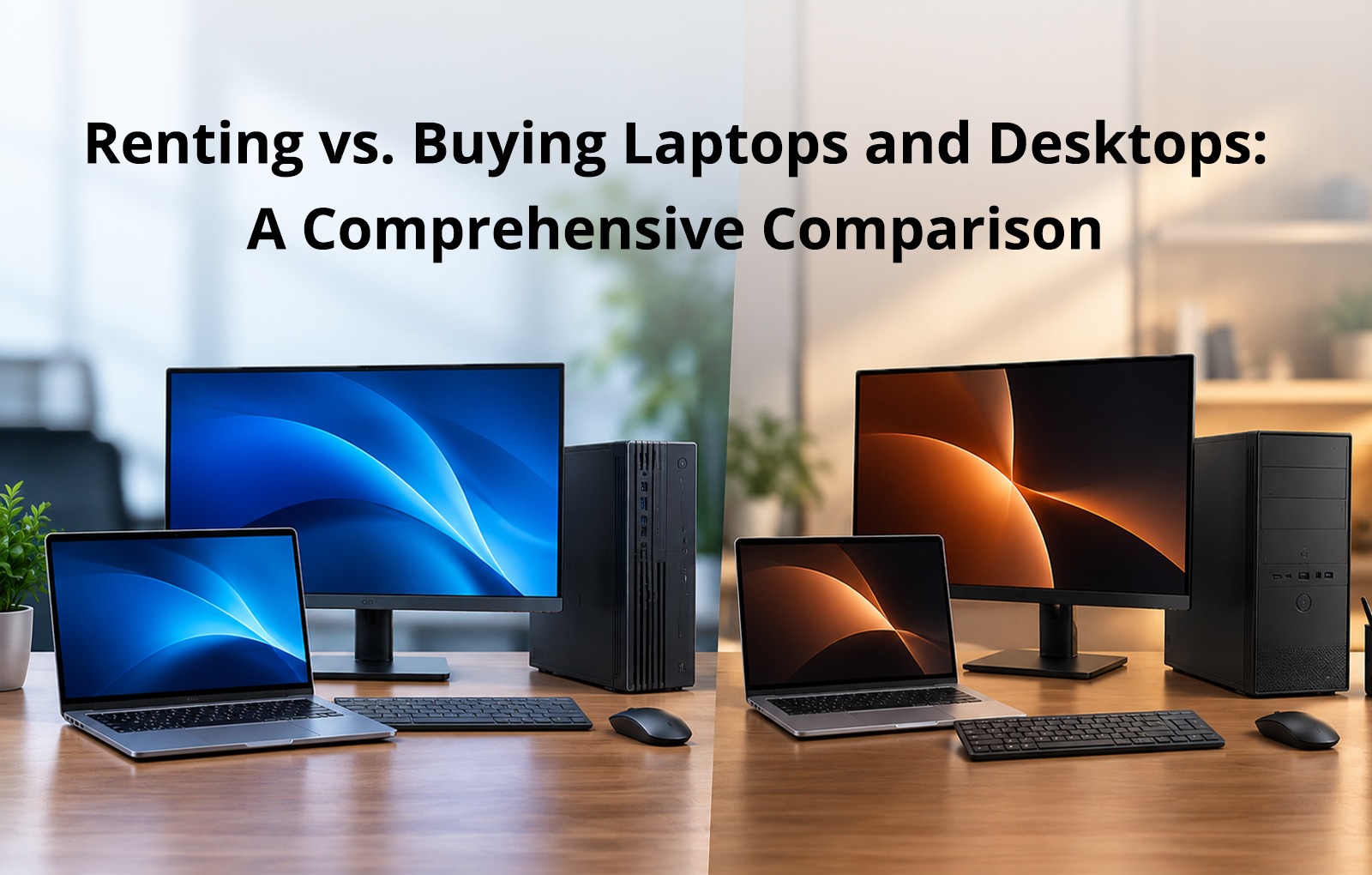
Renting vs. Buying Laptops and Desktops: A Comprehensive Comparison
In today's rapidly changing tech landscape, the decision to rent or buy laptops and desktops is a great confusion. In this blog, we'll explore the concept of renting, discuss its benefits over outright purchases, and dissect the key factors that influence rental costs. In this blog, we will help you to get a clear decision.
Understanding Renting: Beyond Monthly Payments
Renting technology isn't just about making regular payments; it's a flexible and adaptable approach that allows you to access the latest gadgets without the burden of long-term ownership. You can swiftly adapt to changing requirements, return or upgrade equipment as needed, and access top-tier tools with included maintenance and support services.
Why Opt for Renting?
Access to Top-Tier Tools: Renting provides access to premium equipment without a substantial upfront investment. Whether you need high-performance servers, specialized software, or professional-grade devices, renting opens the gateway to a world of cutting-edge tools.
Maintenance and Support: Rental services often include maintenance and support, saving you from equipment hassles. Imagine having a dedicated support team at your disposal, ready to address any technical issues and ensure your equipment runs smoothly without flaws.
Cost-Effective Scaling: For businesses, renting offers a cost-effective way to scale up to meet project demands without committing to expensive purchases. This adaptability is particularly valuable in industries where technology evolves rapidly.
Key Factors in Determining Rental Costs
The cost of renting laptops and desktops depends on various factors:
- Type and Quality of Equipment: Your choice of laptop or desktop, including its type, model, and quality, will influence the rental cost accordingly . Specialized laptops, like high-performance gaming models or professional workstations, tend to command higher fees.
- Rental Duration: The duration for which you need the equipment is a decisive factor in cost determination. Short-term rentals may seem costlier on a per-day basis but are ideal for temporary needs. Long-term rentals can lead to higher cumulative costs but offer savings if you need equipment for an extended period.
- Maintenance and Support: Including maintenance and support services in your rental may result in slightly higher monthly fees. However, this peace of mind is invaluable, especially for businesses reliant on uninterrupted equipment functionality.
- Insurance: Many rental services offer optional insurance coverage. Opting for insurance safeguards against unexpected damages, such as accidental drops or spills, saving you from potential repair or replacement expenses.
- Market Demand: Rental prices can fluctuate based on equipment demand and availability. During peak seasons, costs may rise due to limited availability, while off-peak times often offer more competitive prices.
Exploring the Advantages of Renting
- Adaptability to Changing Needs: In a fast-changing tech world, renting offers unmatched flexibility. You can scale up or down to align with your evolving personal or business needs.
- Financial Efficiency: Renting reduces initial expenses, making it a fantastic choice for individuals or businesses with limited capital. You know your monthly costs precisely, facilitating budgeting.
- Freedom from Long-Term Commitments: Avoid the hassle of owning potentially obsolete equipment. Renting allows you to seamlessly upgrade to the latest models, keeping you at the forefront of technology.
Disadvantages of Renting
- Lack of Ownership: When you rent, you don't own the product . This limits your ability to make substantial modifications, sell the equipment, or use it as collateral for a loan.
- Cumulative Costs: Long-term rentals can accumulate costs that surpass the purchase price of the equipment. It's crucial to consider the duration that aligns with your long-term needs.
- Limitations on Customization: Renting may restrict your ability to customize the equipment extensively. Ownership offers greater flexibility in customizing to meet your specific requirements.
Did You Know?
According to a recent survey, 67% of respondents expressed openness to renting tech devices, with a staggering 75% considering it a practical option for managing their technology needs. These statistics underscore the increasing relevance and acceptance of renting as a viable alternative to traditional purchasing.
Rentla is the best laptop rental company in Chennai at afforadable prices.
In Conclusion
The next time you find yourself at the crossroads of a tech upgrade decision, consider looking beyond conventional outright purchases and explore the world of renting. It's not just a cost-effective choice; it's a gateway to staying at the cutting edge of technology without the enduring commitment of ownership. With the flexibility to adapt swiftly to changing needs, financial efficiency, and the potential for cost savings, renting stands as a valuable alternative that warrants careful consideration. Ultimately, the choice between renting and buying hinges on your unique requirements and circumstances, so make your decision with informed confidence.
Renting IT equipment in Chennai?
Laptops, MacBooks and workstations for teams and projects, delivered, set up and supported. Rent one or hundreds.